I can never resist the inky color and nutty bite of perfectly cooked black rice, especially when it makes salads and side dishes look instantly striking. This is the grain that quietly steals the show on any plate.
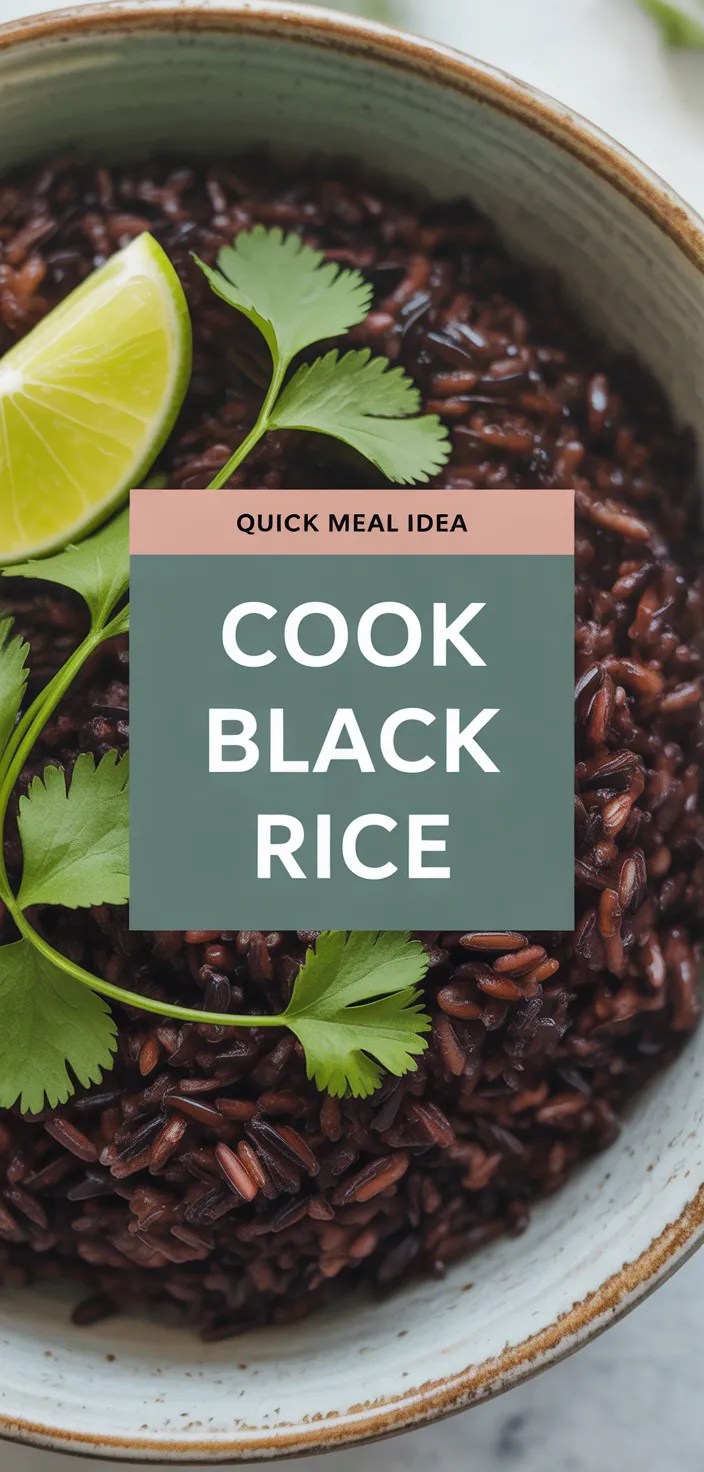
I’m obsessed with black rice because it refuses to be boring. The color alone gets me: deep purple-black, glossy, a little dramatic in the bowl.
But the real reason I keep coming back is the chew. Nutty, earthy, slightly sweet, with enough bite to make salads feel serious and side dishes feel like they actually showed up.
I love it with unsalted stock when I want extra savory depth, or finished with fresh herbs when I’m leaning bright and snappy. And yes, it looks fancy.
Minimal effort, maximum attitude. The kind of grain I always want waiting in the fridge.
Ingredients
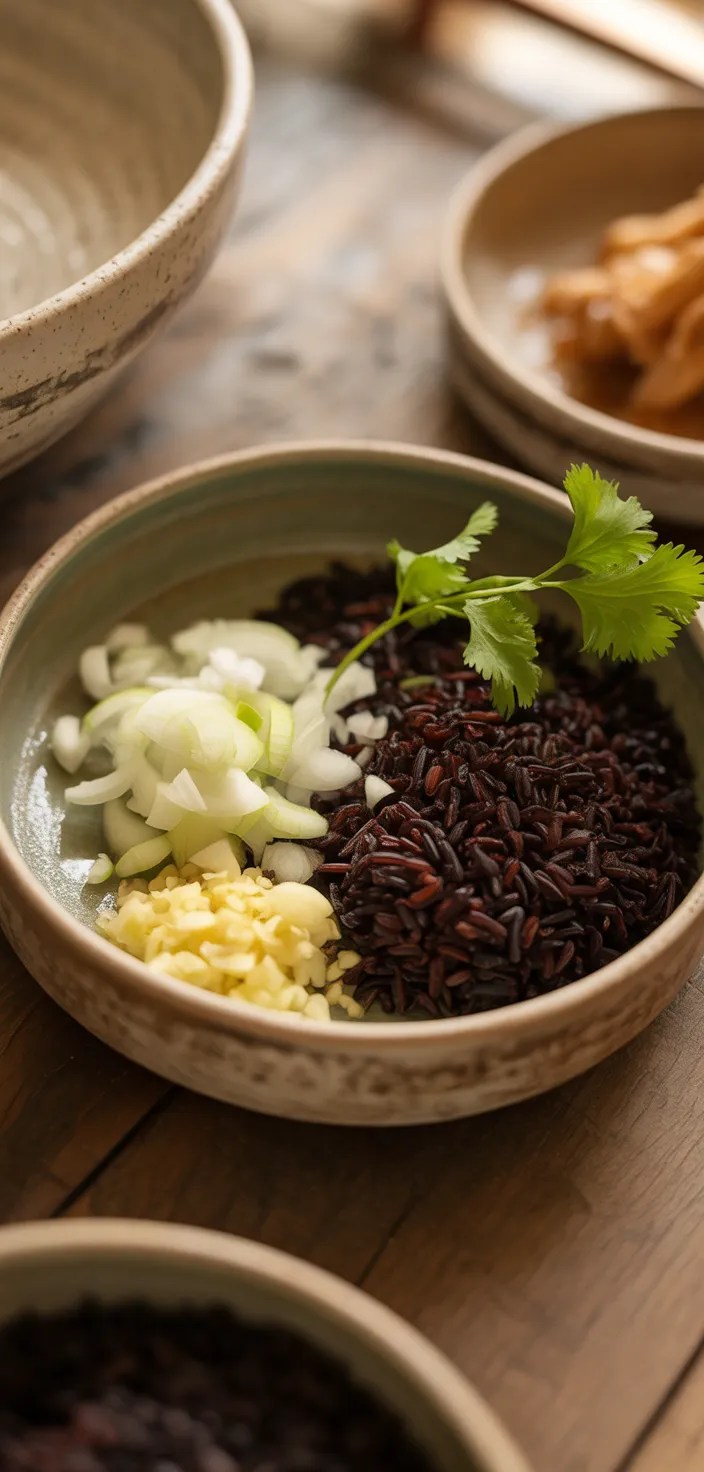
- Black rice cooks up chewy, nutty, and dramatic.
It’s the star here.
- Water keeps it simple, while stock makes every bite taste more rounded.
- Sea salt matters.
Without it, the rice can taste a little flat.
- Neutral oil or butter helps keep grains cozy, glossy, and less sticky.
- For pilaf, stock adds savory depth without making things too heavy.
- Olive oil or butter gives the pilaf base a softer, richer start.
- Onion brings sweetness and that “something’s cooking” smell everyone loves.
- Garlic adds a warm punch, but it shouldn’t take over.
- Bay leaf is optional, but it sneaks in a cozy background flavor.
- Toasted sesame oil or olive oil at the end makes it feel finished.
- Rice vinegar or lime juice wakes up salads fast.
Basically, don’t skip brightness.
- Fresh herbs add color, freshness, and a little crunch.
Plus, they’re pretty.
Ingredient Quantities
- 1 cup (200 g) black rice
- 1 3/4 cups (420 ml) water or unsalted stock for absorption method
- 4 to 6 cups (950 ml to 1.4 L) water for pasta method
- 1 teaspoon fine sea salt for cooking (adjust to taste)
- 1 tablespoon neutral oil or unsalted butter for cooking
- 1 cup (240 ml) unsalted stock for pilaf method (same as absorption volume)
- 1 tablespoon olive oil or butter for the pilaf base
- 1 small yellow onion, finely chopped (about 1/2 cup)
- 1 garlic clove, minced
- 1 bay leaf (optional for pilaf)
- 1 teaspoon toasted sesame oil or extra virgin olive oil for finishing, optional
- 1 tablespoon rice vinegar or fresh lime juice for salads, optional
- Fresh herbs like cilantro, parsley, or scallions for garnish, optional
How to Make this
1. Rinse 1 cup (200 g) black rice under cold water until the water runs mostly clear; drain well. Optional: soak 20 to 30 minutes to shorten cooking time and improve texture, then drain.
2. Absorption method: In a medium saucepan combine rinsed rice, 1 3/4 cups (420 ml) water or unsalted stock, 1 teaspoon fine sea salt, and 1 tablespoon neutral oil or unsalted butter. Bring to a boil over medium heat.
3. When boiling, reduce to a low simmer, cover tightly, and cook gently for 30 to 35 minutes until liquid is absorbed and grains are tender but slightly chewy. If rice is still firm with no liquid, add a few tablespoons more water and continue cooking a few minutes.
4. Turn off the heat and let the rice sit covered for 10 minutes to steam and finish cooking. Remove the lid and fluff with a fork.
5. Pasta method: Bring 4 to 6 cups (950 ml to
1.4 L) of water to a rolling boil in a large pot, add 1 teaspoon fine sea salt, then stir in rinsed rice. Boil uncovered, stirring occasionally, for 20 to 25 minutes until grains are tender but not mushy.
6. Drain the rice in a fine mesh sieve, return to the warm pot, toss with 1 tablespoon neutral oil or unsalted butter to prevent sticking, and let rest 2 to 3 minutes before fluffing.
7. Pilaf method: Heat 1 tablespoon olive oil or butter in a saucepan over medium heat, add 1 small finely chopped yellow onion and cook until translucent about 4 to 5 minutes. Add 1 minced garlic clove and cook 30 seconds.
8. Stir in rinsed rice and toast for 1 to 2 minutes until glossy. Add 1 cup (240 ml) unsalted stock, 1 teaspoon fine sea salt, and 1 bay leaf if using. Bring to a simmer, cover, and cook 30 to 35 minutes until liquid is absorbed and rice is tender. Let rest 10 minutes off heat, then fluff and remove bay leaf.
9. Finish and season: For salads or brighter flavor stir in 1 tablespoon rice vinegar or fresh lime juice if desired. Drizzle 1 teaspoon toasted sesame oil or extra virgin olive oil for aroma and adjust salt to taste.
10. Serve warm or chilled, garnished with fresh herbs like cilantro, parsley, or scallions. Store leftovers in an airtight container in the fridge for up to 4 days.
Equipment Needed
1. Medium saucepan with tight-fitting lid
2. Large pot for pasta method
3. Fine mesh sieve or strainer
4. Measuring cups and spoons
5. Kitchen scale (for 200 g rice)
6. Wooden spoon or heatproof spatula
7. Fork for fluffing
8. Small skillet for toasting aromatics and finishing oils
FAQ
How To Cook Black Rice: The Best Methods + Tips & Tricks Recipe Substitutions and Variations
- Black rice: forbidden rice, wild rice blend, short grain brown rice (cook times differ)
- Water or unsalted stock for absorption method: low sodium chicken or vegetable stock, diluted coconut milk for a richer, slightly sweet result, or a 50/50 mix of stock and water
- 1 small yellow onion: shallot, sweet onion, or thinly sliced red onion
- 1 teaspoon toasted sesame oil for finishing: walnut oil, toasted peanut oil, light sesame oil, or extra virgin olive oil
Pro Tips
1. Soak briefly if you can: a 20 to 30 minute soak cuts cooking time and helps grains cook more evenly, giving a tender center with that pleasant chew black rice is known for.
2. Watch your liquid and heat: for absorption use exactly measured stock or water and keep the simmer low and steady. If the surface looks dry but the grains still feel firm, add a few tablespoons of hot liquid rather than cranking up the heat.
3. Build flavor early: sweat the onion until soft and just turning translucent before adding rice, then toast the rinsed grains a minute or two. That little step boosts aroma and keeps the finished rice more interesting than plain boiled rice.
4. Finish gently and season last: let the rice rest covered for 10 minutes, then fluff with a fork. Brighten cold salads with a splash of rice vinegar or lime and a drizzle of toasted sesame oil right before serving so those flavors pop without overpowering the rice.

How To Cook Black Rice: The Best Methods + Tips & Tricks Recipe
I can never resist the inky color and nutty bite of perfectly cooked black rice, especially when it makes salads and side dishes look instantly striking. This is the grain that quietly steals the show on any plate.
4
servings
258
kcal
Equipment: 1. Medium saucepan with tight-fitting lid
2. Large pot for pasta method
3. Fine mesh sieve or strainer
4. Measuring cups and spoons
5. Kitchen scale (for 200 g rice)
6. Wooden spoon or heatproof spatula
7. Fork for fluffing
8. Small skillet for toasting aromatics and finishing oils
Ingredients
1 cup (200 g) black rice
1 3/4 cups (420 ml) water or unsalted stock for absorption method
4 to 6 cups (950 ml to 1.4 L) water for pasta method
1 teaspoon fine sea salt for cooking (adjust to taste)
1 tablespoon neutral oil or unsalted butter for cooking
1 cup (240 ml) unsalted stock for pilaf method (same as absorption volume)
1 tablespoon olive oil or butter for the pilaf base
1 small yellow onion, finely chopped (about 1/2 cup)
1 garlic clove, minced
1 bay leaf (optional for pilaf)
1 teaspoon toasted sesame oil or extra virgin olive oil for finishing, optional
1 tablespoon rice vinegar or fresh lime juice for salads, optional
Fresh herbs like cilantro, parsley, or scallions for garnish, optional
Directions
- Rinse 1 cup (200 g) black rice under cold water until the water runs mostly clear; drain well. Optional: soak 20 to 30 minutes to shorten cooking time and improve texture, then drain.
- Absorption method: In a medium saucepan combine rinsed rice, 1 3/4 cups (420 ml) water or unsalted stock, 1 teaspoon fine sea salt, and 1 tablespoon neutral oil or unsalted butter. Bring to a boil over medium heat.
- When boiling, reduce to a low simmer, cover tightly, and cook gently for 30 to 35 minutes until liquid is absorbed and grains are tender but slightly chewy. If rice is still firm with no liquid, add a few tablespoons more water and continue cooking a few minutes.
- Turn off the heat and let the rice sit covered for 10 minutes to steam and finish cooking. Remove the lid and fluff with a fork.
- Pasta method: Bring 4 to 6 cups (950 ml to
- 4 L) of water to a rolling boil in a large pot, add 1 teaspoon fine sea salt, then stir in rinsed rice. Boil uncovered, stirring occasionally, for 20 to 25 minutes until grains are tender but not mushy.
- Drain the rice in a fine mesh sieve, return to the warm pot, toss with 1 tablespoon neutral oil or unsalted butter to prevent sticking, and let rest 2 to 3 minutes before fluffing.
- Pilaf method: Heat 1 tablespoon olive oil or butter in a saucepan over medium heat, add 1 small finely chopped yellow onion and cook until translucent about 4 to 5 minutes. Add 1 minced garlic clove and cook 30 seconds.
- Stir in rinsed rice and toast for 1 to 2 minutes until glossy. Add 1 cup (240 ml) unsalted stock, 1 teaspoon fine sea salt, and 1 bay leaf if using. Bring to a simmer, cover, and cook 30 to 35 minutes until liquid is absorbed and rice is tender. Let rest 10 minutes off heat, then fluff and remove bay leaf.
- Finish and season: For salads or brighter flavor stir in 1 tablespoon rice vinegar or fresh lime juice if desired. Drizzle 1 teaspoon toasted sesame oil or extra virgin olive oil for aroma and adjust salt to taste.
- Serve warm or chilled, garnished with fresh herbs like cilantro, parsley, or scallions. Store leftovers in an airtight container in the fridge for up to 4 days.
Notes
- Below you’ll find my best estimate of this recipe’s nutrition facts. Treat the numbers as a guide rather than a rule—great food should nourish both body and spirit. Figures are approximate, and the website owner assumes no liability for any inaccuracies in this recipe.
Nutrition Facts
- Serving Size: 170g
- Total number of serves: 4
- Calories: 258kcal
- Fat: 9.4g
- Saturated Fat: 0.8g
- Trans Fat: 0g
- Polyunsaturated: 1.5g
- Monounsaturated: 5g
- Cholesterol: 0mg
- Sodium: 575mg
- Potassium: 157mg
- Carbohydrates: 40.7g
- Fiber: 3.3g
- Sugar: 0.8g
- Protein: 4.5g
- Vitamin A: 0IU
- Vitamin C: 1.5mg
- Calcium: 10.8mg
- Iron: 1.8mg